River Valley Jewelcraft
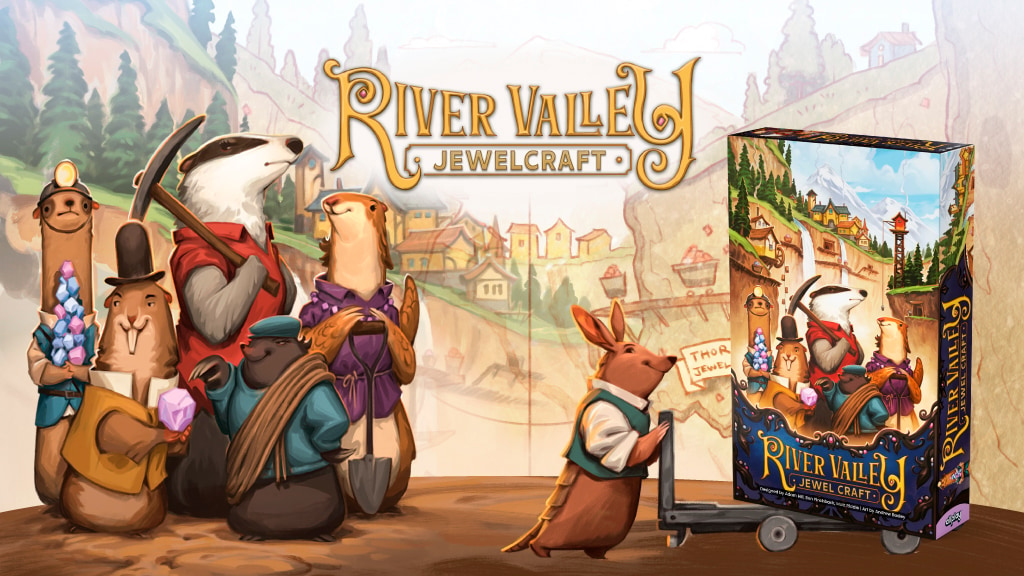
River Valley Jewelcraft is a family-friendly strategy game published by Allplay that has players mining radiant gemstones from under their idyllic town and turning them into beautiful jewelry.
On your turn, roll dice to activate a row or column on your mine board grid, collecting gems and triggering additional bonuses. Use your worker's unique movement rules and powers to collect more gems, clear rubble, and best prepare for future turns. Carefully lay tiles in your mine over time to improve your potential spoils. Use your gems to craft exquisite jewelry and build a powerful scoring engine.
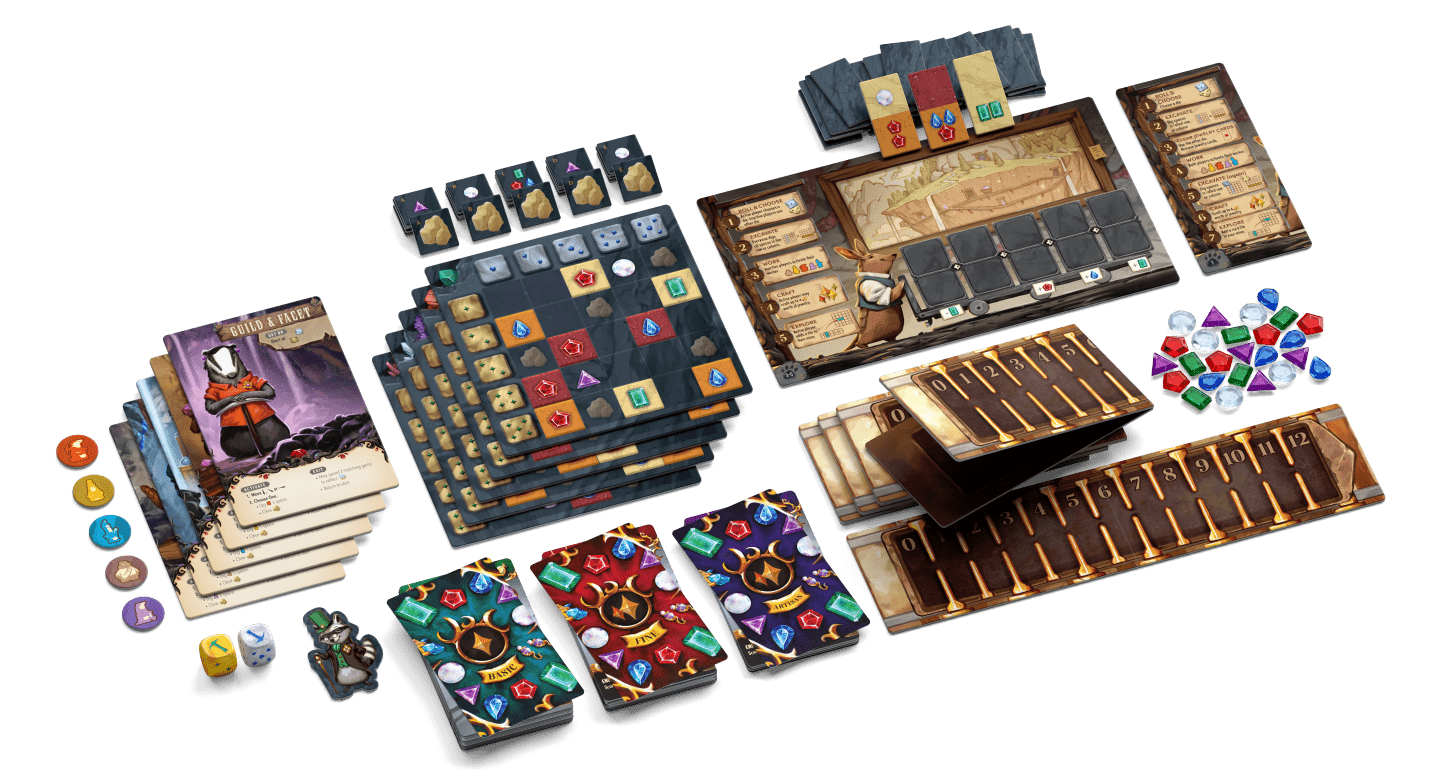
Project Overview:
River Valley Jewelcraft is the second game in Allplay's River Valley series, which started with the cozy glass collecting game River Valley Glassworks (also developed by Brieger Creative).
Brieger Creative's development of River Valley Jewelcraft was quite extensive. Adam Hill, Ben Pinchback, and Matt Riddle turned in a core concept, but the majority of the systems and content weren't right for the product vision and audience as established by Allplay.
Working from their fun core concept of placing tiles on a grid and rolling dice to activate them, we focused hard on making the best version of that experience. This involved cutting and heavily modifying the original design and creating brand new systems and content for deeper, more engaging play.
Services Provided:
- Game Design
- Game Development
- Gameplay Streamlining
- Solo Mode Design
- Expansion Design
- Playtest Coordination and Analysis
Case Study: Redesign
The prototype as submitted had an interesting core mechanic of placing tiles on a mine grid and rolling dice to trigger those rows and columns of tile spaces. From this, we were directed by our client, Allplay, to build out the rest of the game with a vision of "Splendor meets Space Base."
After carefully evaluating the submission, we cut all existing elements of the submitted concept other than three key things, each of which we slightly modified:
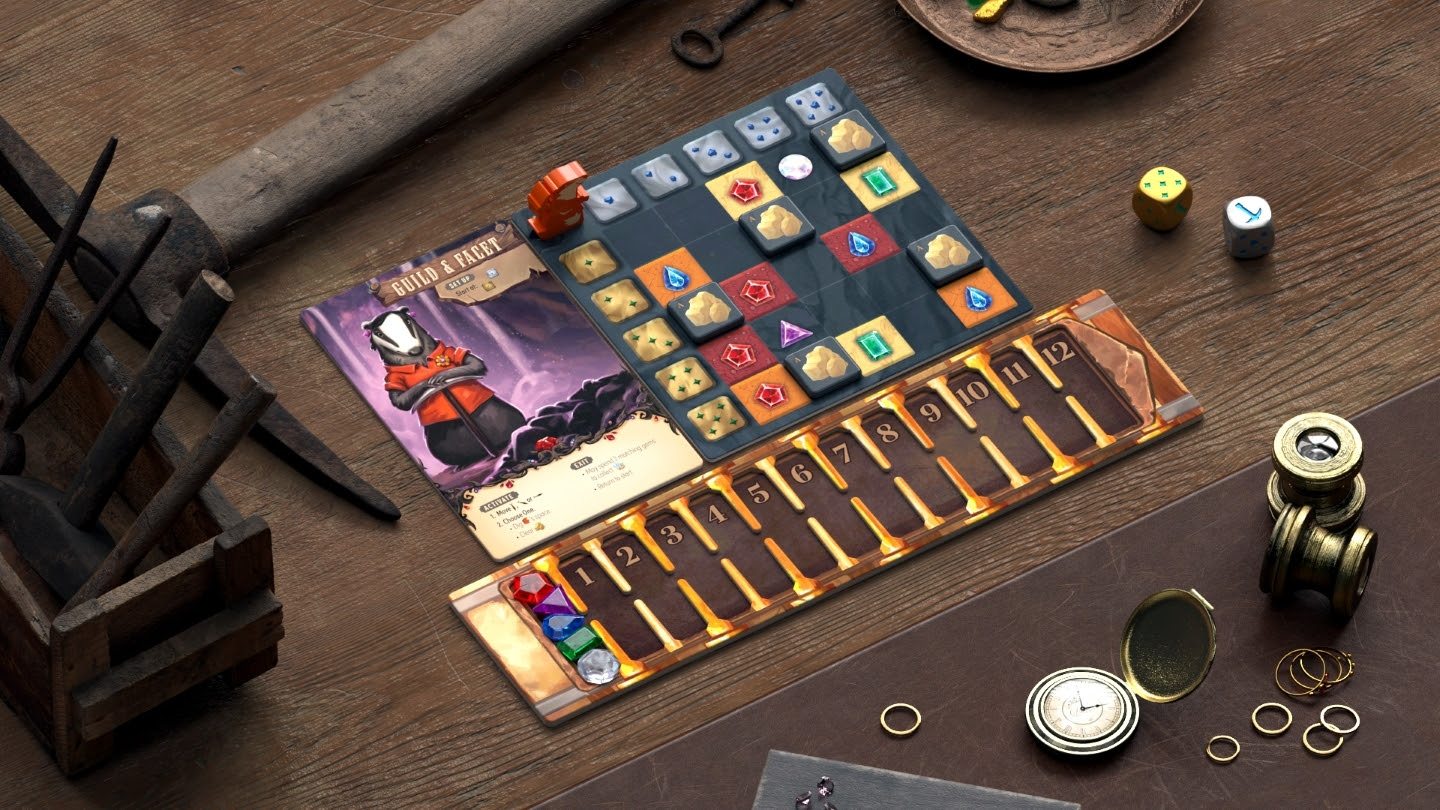
- You take 2x1 tiles from a market of tiles. We changed this from a tiered market with costs to a flowing market with incentives for taking the oldest tile.
- You place those tiles into a grid, which has some preprinted spaces. After looking at game length and pacing, we tightened the core grid from a 6x6 to a 5x5.
- You roll two dice and pick one, with all other players using the other die. The die you use dictates which row or column of your grid activates. We changed this system to have two colors of die, one for rows and one for columns, instead of picking a number that could be used for a row or column.
From these core elements of the designers' concept, we built up new systems and designed the game's new endgame and victory conditions, tiles, powers, and cards.
Making Gems Shine
In the initial concept, gems of a single color were spent for victory points + one of four bonuses. There were not strong incentives to go after certain gem types at any point, making gameplay feel flat within a game and same-y across multiple plays. Most importantly, in a game called River Valley Jewelcraft, it didn't feel like you were crafting anything.
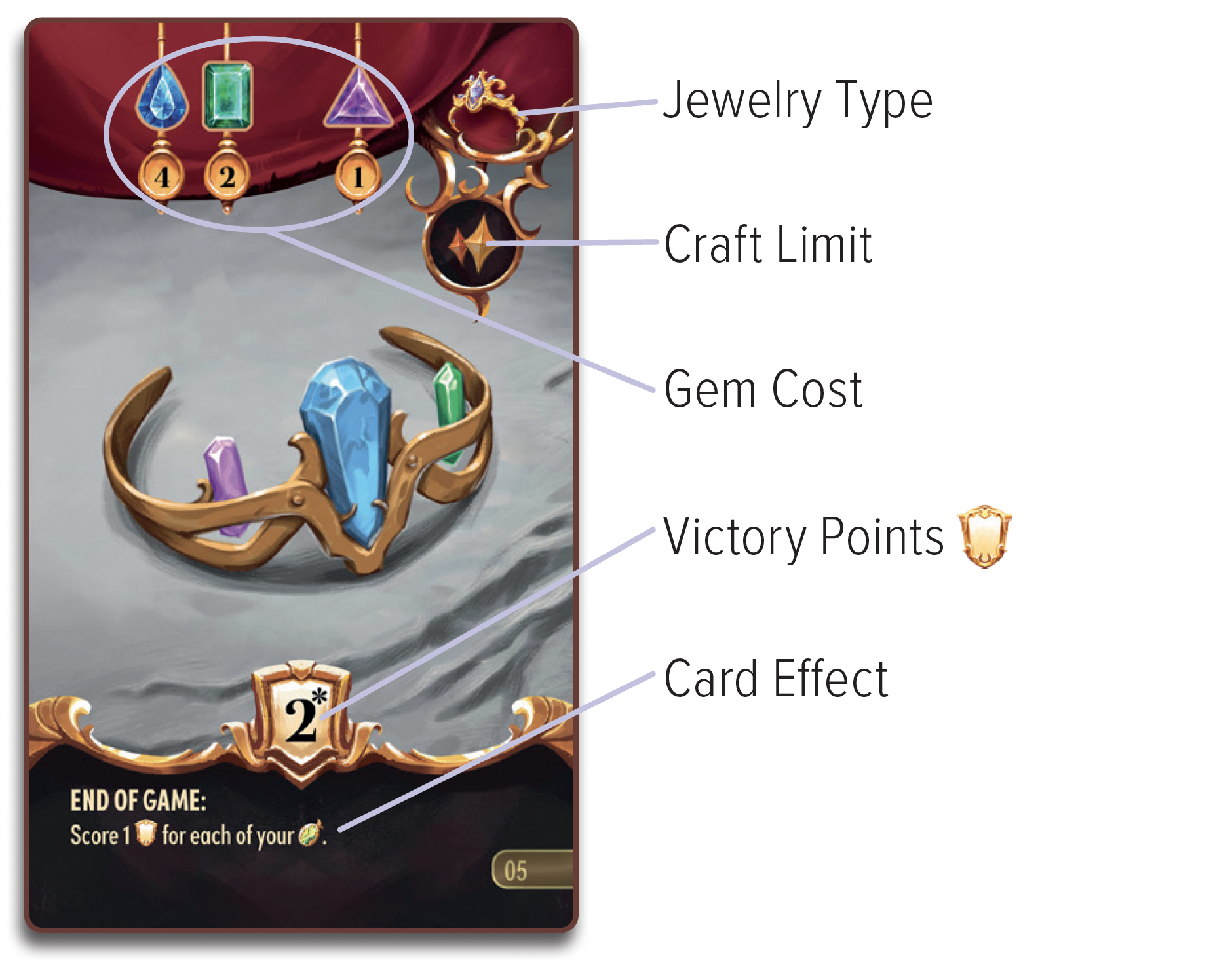
After exploring several directions, the dev team landed on recipe-fulfillment style jewelry cards as the primary driver of scoring. Each jewelry card is a different piece of jewelry built from a specific combination of gems.
Cards each have a type (necklace, ring, tiara, or timepiece), giving them an identity and interacting with some secondary scoring and other effects:
- Rings give flat victory points
- Necklaces give you benefits right when you craft them
- Timepieces give you a repeatable power or benefit
- Tiaras give you new ways to score in the endgame.
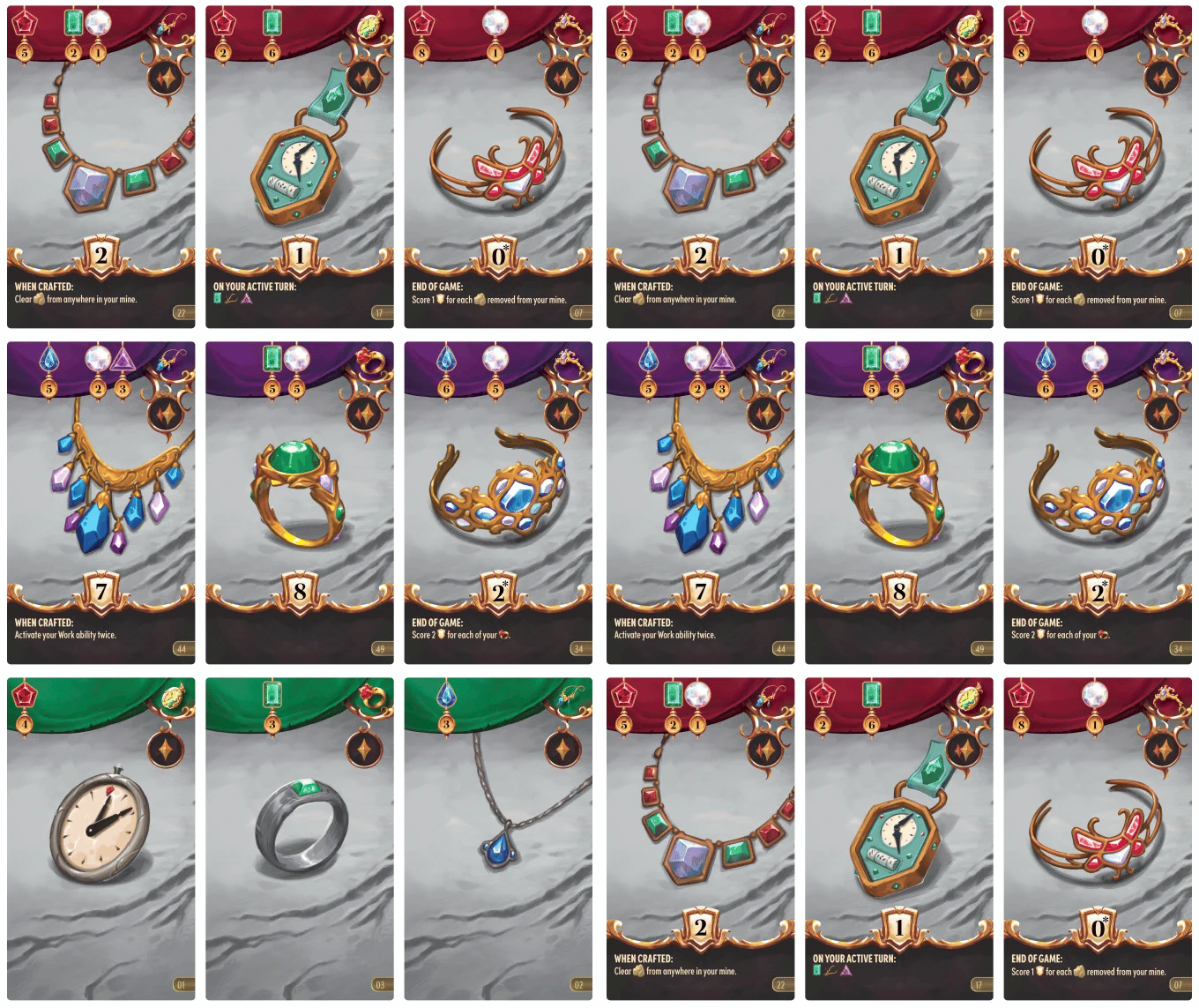
Jewelry cards helped the game in many ways, especially once combined with the new tiles and market. The player cared about specific gems and had clear goals they could work towards and strategize around.
For example, if there was a jewelry card you needed a blue jewel to complete, you now had several options:
- draft a tile from the a tile market space to get a bonus blue gem
- draft a tile with a blue gem to add to your mine
- craft a different jewelry card with a gem trading power to trade for a blue
- activate your animal worker to obtain it using your mine board
Jewelry cards were divided into tiers of Artisan, Fine, and Basic jewelry to better present the right distribution to the player, allowing them to go for their preferred combination of quantity vs quality. To support this, we developed a new economy of the game with clearer gem rarities, distributions, and additional resource options for players.
Digging into the Mine
We spent a long time working on finding ways to "texture" the placement of tiles in your personal mine board. What incentives do players have to get different kinds of tiles and how do they place them?
We tried a number of different types of new tiles and texturing options, including building mine-cart track routes in addition to gemstone mining, unique conversions similar to what appears on timepiece jewelry cards, and many other powers. In the end, we came to a couple key decisions on the design space for tiles.
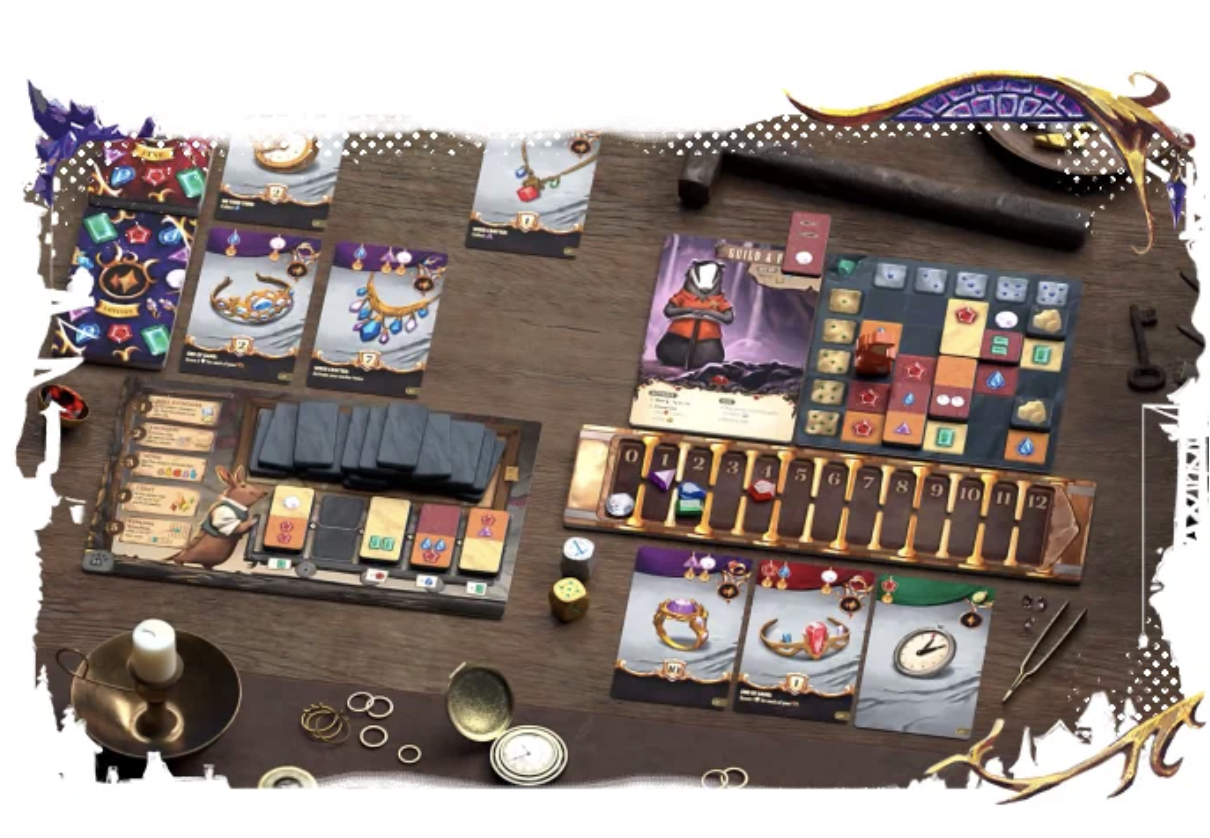
With a new market board that could more dynamically adjust prices of tiles, we increased the variety of gem distributions across the tiles. We added new types of spaces that interact with other spaces and with your worker.
Finally, we added a new gameplay element, rock types. Each tile has some combination of 3 rock types printed behind the gem icons. Each player scores connected rock groups in their mine at the end of the game. The combination of tile additions and changes give the player a lot to play around. Do they choose a tile that is better for rock grouping or a tile that has a gem resource they need? Even minor placements can help build rock groups for the future.
Workers
Development was going great, players were having lots of fun, choices mattered. We had cut the "match a worker pickaxe to a gem" gameplay from the original prototype, but players' desire to have a representation of workers in their mine was still there.
We tried a few different variants: rotating pools of workers with small benefits you drafted, having a "big worker" and an "assistant", and around 8 different ways to activate and integrate workers into your grid. In the end, players now have a unique worker, such as a badger or meerkat, represented as a meeple that physically moves around their mine board spaces.
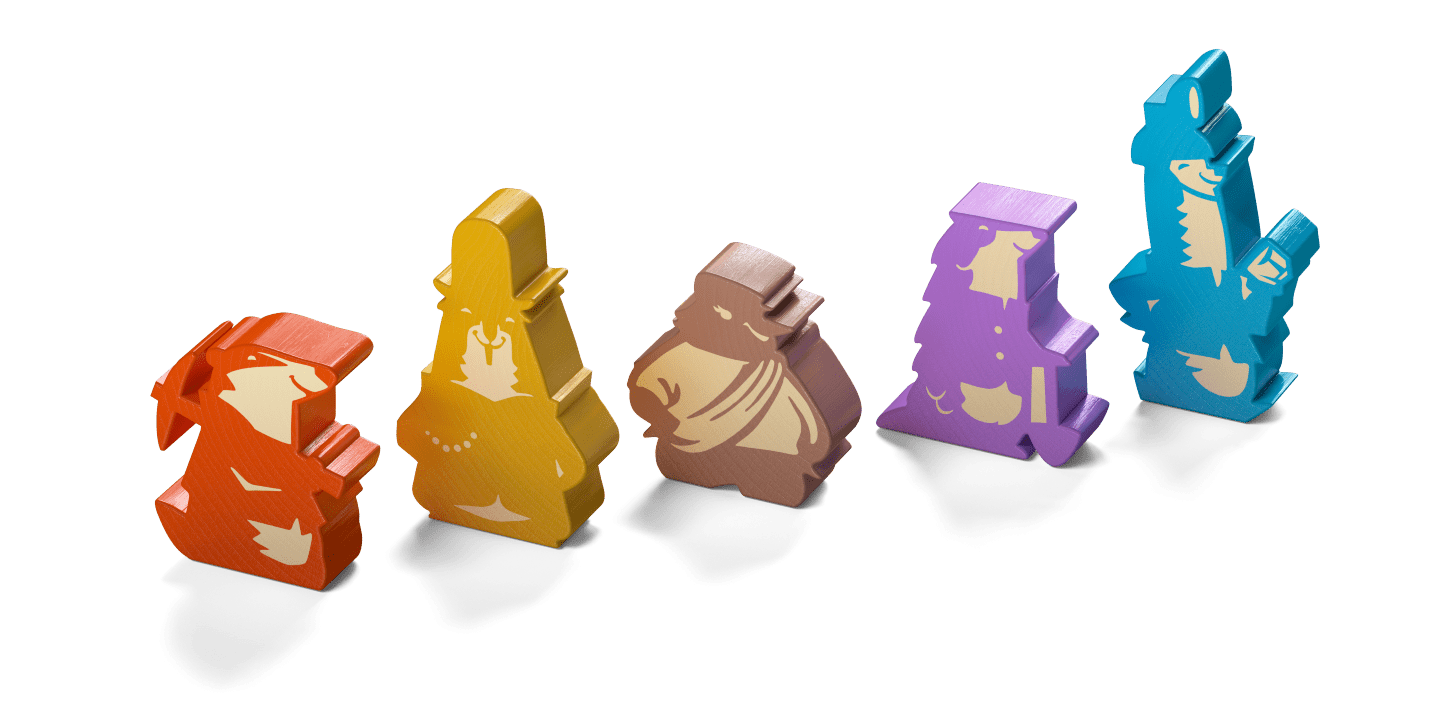
While moving, the worker activates spaces and clears rubble (another new system we added to texture the mine board). Each worker has its own special power, such as collecting gems from further away or using the normally hindering rubble as a benefit. Players loved this.
Workers add a great layer to the puzzle with lots of added replayability. The toylike meeples also greatly improved the table presence, customer value, and general appeal of the product.
Bringing it all Together
After more late nights than we care to mention, the development team had a game we were happy with and players now loved. Choices were meaningful. Drafting tiles and building the mine was puzzly and strategic. Animal meeples provided a great tactical (and tactile) element.
We created an achievement based solo mode that has the player earning a rating from crafting jewelry and specific challenges they choose to pursue.
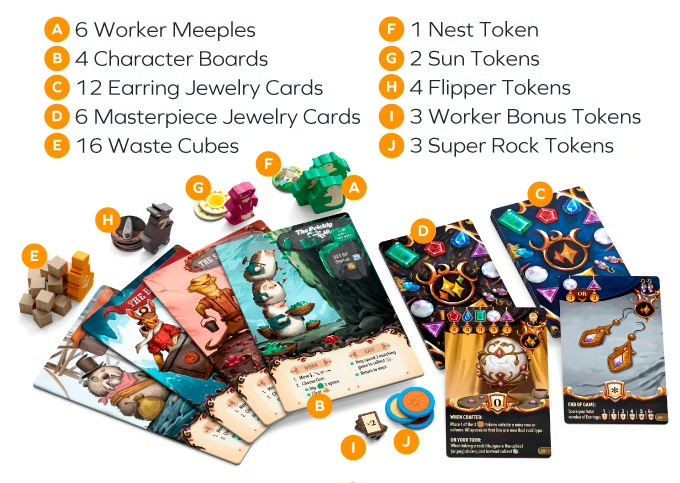
At Allplay's request, Brieger Creative also designed the Mastercrafts and Other Fineries expansion, built on the systems we'd added during development: 2 new types of jewelry to craft and 4 additional asymmetric workers with some of our wildest powers yet.
Lastly, we wanted to thank the publisher Allplay and designers Adam Hill, Matt Riddle, and Ben Pinchback for trusting us with changes this extensive. Adam, Matt, and Ben are an immensely talented design team, and the redesign of River Valley Jewelcraft was never about the quality of their work: we built on the foundational concepts, brand, and audience they established with River Valley Glassworks, and the core loop and appeal of the design concepts they delivered.
It takes an tremendous amount of trust from designers to support a multi-entry game line like the River Valley series, and it's something Brieger Creative never takes for granted.
Brieger Creative Team
- Velgus
- John Brieger
- Bryan "Duckie" Lue